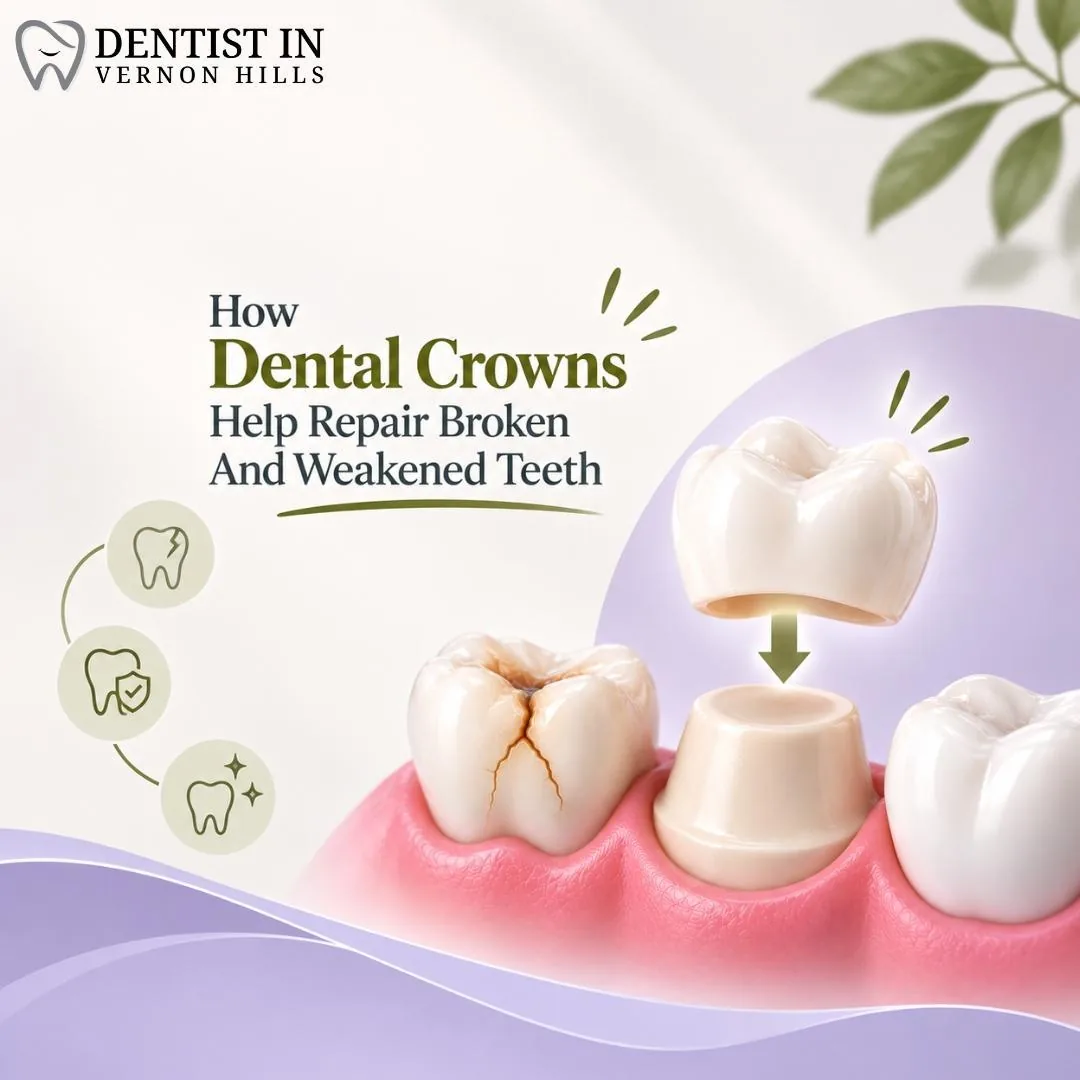
Many people worry about a broken or weak tooth. They may feel pain, avoid chewing, or fear more damage. A dental crown is a tooth-shaped cap that restores a decayed, broken, weak, or worn-down tooth. Dentists use crowns to cover implants and protect damaged teeth.
Here you will know how crowns restore strength, hold cracked teeth together, and stop further harm.
Dental crowns act as a protective cap for damaged or weak teeth. Dentists place them over the tooth to restore its normal shape and function.
A tooth-shaped cap restores a decayed, broken, weak, or worn-down tooth. Dentists place the crown to cover implants and to protect damaged teeth. The cap encases the visible portion of the tooth to prevent cracks or fractures from reaching the root.
A crown can hold a fractured tooth together and protect the nerve inside. A patient reported the cap stopped pain and let them chew normally, showing restored strength and function. Crowns also improve appearance, support chewing, and protect against future tooth decay.
Dental crowns serve multiple purposes in dental care. Many people need them for various reasons.
Dental crowns restore broken and weakened teeth by providing essential support. They reinforce the tooth's structure, preventing further damage and promoting oral health.
Crowns restore the structure and strength of broken or weakened teeth. They act as a tooth-shaped cap that encases the visible part of a damaged tooth. This covering helps prevent cracks or fractures from spreading to the root. A crown reinforces a fractured tooth, keeping it intact and stopping further damage. Through this process, dental crowns improve both function and appearance.
These caps also protect against future problems after experiencing tooth decay. A cavity can weaken a tooth significantly; placing a crown provides essential support. Restoring full strength, crowns enable everyday tasks like chewing without worry. The use of dental crowns ensures oral health remains intact while enhancing smiles at the same time.
Dental crowns offer essential protection for damaged teeth. They act as a tooth-shaped cap that covers and supports weakened or broken teeth. By encasing the visible part of a damaged tooth, they help prevent cracks or fractures from spreading to the root. A dental crown can hold fractured teeth together, stopping them from worsening. If a person has had decay, placing a crown can guard against future problems.
This type of restoration is vital in maintaining oral health. Crowns reinforce teeth and shield the nerve inside each tooth from further harm. They restore both strength and function to compromised teeth, helping maintain proper dental hygiene and appearance. Understanding how different materials are used for crowns will enhance appreciation for this effective dental procedure.
Dental crowns come in various materials, each with its own benefits. Ceramic and porcelain options offer natural-looking aesthetics, while metal and zirconia provide exceptional strength for durability.
Ceramic or porcelain crowns offer an excellent solution for repairing broken and weakened teeth. These materials closely match the natural color of teeth, making them ideal for visible areas in the mouth. Dentists frequently use them to restore function while improving aesthetics.
These crowns provide strong support for damaged teeth. They encase the visible portion of a tooth, preventing fractures from extending to the root. A dental crown can protect a cracked tooth, as it cannot heal on its own. By covering weak or decayed teeth, ceramic and porcelain crowns help maintain good oral health and enhance dental hygiene.
Metal and zirconia crowns offer strong support for damaged teeth. Metal crowns provide excellent durability, making them a good choice for back teeth. They withstand chewing forces well and protect weak or fractured teeth from further harm. Zirconia crowns are popular due to their natural appearance and strength. These crowns blend well with surrounding teeth, enhancing the aesthetics of a smile.
Both materials help restore function after tooth decay or fractures occur. A dental crown encases the visible portion of a weakened tooth, preventing cracks from extending to the root. Patients can enjoy improved oral health through these restorative options while protecting their nerves inside affected teeth.
Dental crowns are caps placed over broken or weakened teeth. They restore the tooth's shape, size, and strength.
Dental crowns cover and protect damaged teeth. They provide support for weak teeth and prevent further damage.
People with broken, cracked, or severely worn-down teeth may need a dental crown. Dentists recommend them to strengthen these affected areas.
Getting a dental crown involves multiple steps. First, the dentist examines the tooth and prepares it for the crown placement; then they take impressions to create a custom fit before placing the final crown on your tooth.
Tell us a little about what you need — we'll be in touch shortly.
555 E Townline Rd Ste 4, Vernon Hills, IL 60061, United States

Hi! I'm Tooth fairy! Your AI Assistant Ask me anything