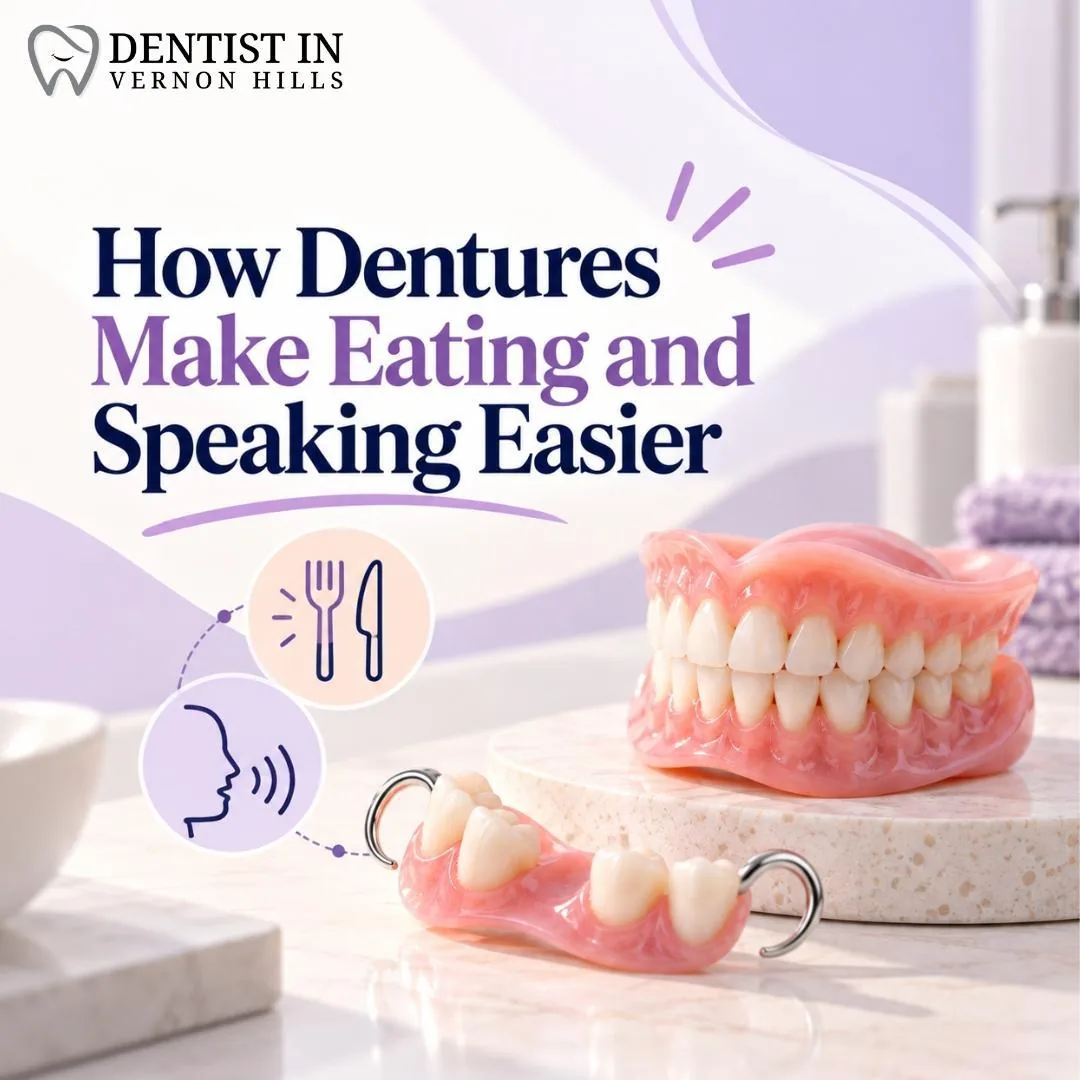
Many people who lose teeth find eating and talking hard. Meals can feel tricky, and words can sound slurred. Social meals can cause stress and shame.
Dentures are prosthetic aids that help people chew again. They restore bite power and make swallowing easier. Here you will know how dentures improve chewing, adjust to food textures, and help with clearer speech.
It also covers tips like using adhesive, taking small bites, and practicing slow speech to keep dentures steady.
Dentures help people eat a wider range of foods. They make chewing less of a struggle, so mealtimes feel enjoyable again.
People regain chewing power with prosthetics that replace missing teeth. They bite more firmly and chew tougher foods. A patient reported eating apples and steak again after fitting. Short bites help new wearers adjust and avoid sore spots.
Clinicians advise regular adjustments and occasional adhesive for added stability. Slipping gums cause slurred speech and trouble swallowing, so gentle biting and swallowing can reseat loose prosthetics. Stable dentures let people speak and chew with more confidence and comfort.
Eating with dentures can feel different at first. Small bites help individuals adapt to new food textures and flavors. For those wearing prosthetics, soft foods are a great starting point.
They are easier to chew and swallow while getting used to dentures. Gradually incorporating firmer foods builds confidence in chewing abilities.
Dentures improve comfort during meals when they fit securely. A proper bite aids in enjoying various flavors without worry. However, changes in mouth dynamics may alter how one experiences taste; the tongue's placement shifts as well.
Regular adjustments keep dentures fitting right for better eating experiences, helping restore joy during mealtime conversations and gatherings.
Dentures help people talk more clearly. They can fix problems with pronunciation and boost confidence while speaking.
Many people face challenges with pronunciation after getting dentures. New prosthetics change where the tongue and lips sit in the mouth. This shift can make it hard to say certain sounds clearly.
Speaking slowly helps adjust to changes while keeping the dentures secure. A person once shared that they struggled with words like "s" and "th." They found that gently biting down and swallowing helped their dentures stay in place during conversations.
Ill-fitting dentures can lead to slurred speech or communication issues, making social situations tougher. Secure dentures provide stability, allowing for clearer articulation of words.
Less movement means smoother speech patterns overall. With practice and patience, anyone can improve their speaking skills with time and confidence!
Adjusting to dentures can be challenging at first. Clear speech becomes easier with a few techniques.
Dentures provide a stable surface for chewing food. They allow you to bite and grind without pain or discomfort. With proper fitting, they make meals enjoyable again.
Yes, dentures can enhance your speech clarity. They support your lips and cheeks, helping you pronounce words correctly. Many people find it easier to talk after getting used to their new teeth.
Initially, there may be some adjustment time needed when you start wearing dentures. You might feel slight soreness or difficulty in speaking at first; however, this usually passes quickly as you adapt.
Absolutely! Caring for your dentures is crucial for longevity and comfort. Clean them daily with a soft brush and soak them overnight in a denture solution to keep them fresh and bacteria-free.
Tell us a little about what you need — we'll be in touch shortly.
555 E Townline Rd Ste 4, Vernon Hills, IL 60061, United States
Hi! I'm Tooth fairy! Your AI Assistant Ask me anything