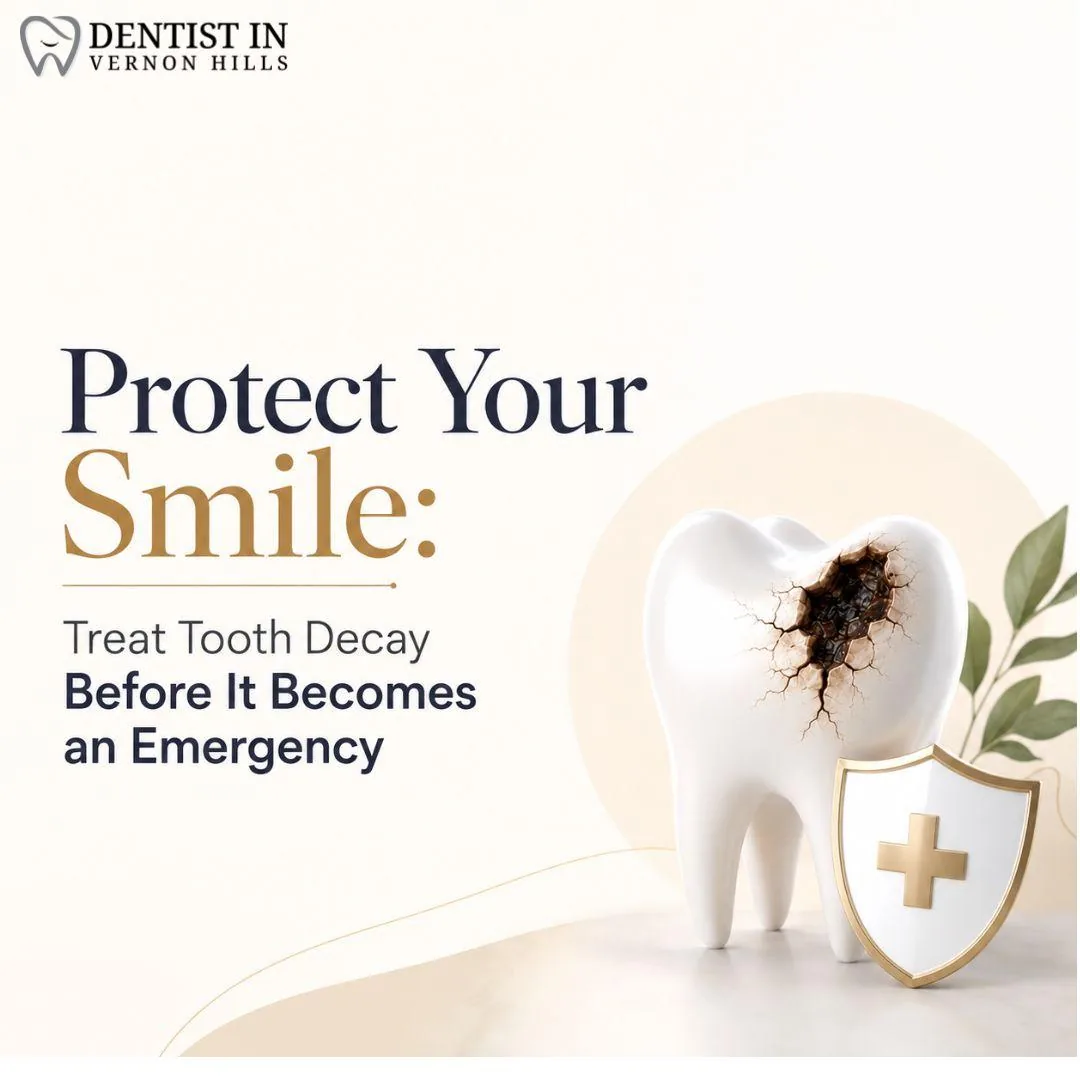
Many people feel a sharp pain or see a dark spot and worry. They must seek treatment for tooth decay before it becomes an emergency. Tooth decay often starts small, with a cavity or sensitivity. If untreated, it can cause pain, infection, or tooth loss.
Fluoride can stop early decay and even reverse it by forming a protective barrier against bacteria. Here you will know about early signs, common treatments, and simple prevention steps like daily brushing, flossing, fluoride, sealants, regular dental checkups and dental emergencies.
Tooth decay progresses quickly if neglected. Early signs often include discomfort or sensitivity in specific teeth. A toothache can signal a more serious issue. Cavities start small but can grow into larger problems over time. Untreated cavities lead to severe pain, infections, and even tooth loss.
Ignoring these symptoms increases the risk of dental emergencies. Regular dental visits play a crucial role in preventive care; they help catch issues before they worsen. Professional cleanings remove tartar that brushing cannot eliminate on its own.
Fluoride treatments act as an extra layer of defense against decay-causing bacteria and acids. Taking action early keeps smiles healthy and prevents costly dental treatment down the line.
Fluoride plays a vital role in treating tooth decay. This mineral can stop early decay and even reverse damage in some cases. It builds a protective barrier on teeth, defending against bacteria and acids that cause cavities. Regular fluoride treatments enhance this defense, offering long-term protection.
Dental sealants also provide effective solutions for preventing tooth decay. These thin coatings protect the surface of teeth from harmful substances. Professional cleanings regularly eliminate tartar buildup that brushing alone cannot remove; this helps maintain optimal dental health.
For existing cavities, dentists often recommend fillings as a solution to restore the tooth's structure and function effectively.
Maintaining a healthy smile requires consistent oral hygiene. Daily brushing and flossing remain two of the easiest ways to fight cavities and prevent tooth decay. Regular dental visits ensure preventive care, which helps avoid dental emergencies. Professional cleanings remove tartar that brushing alone cannot eliminate.
Fluoride treatments strengthen teeth by creating a protective barrier against decay-causing bacteria and acids. Dental sealants provide long-term defense against tooth decay, particularly in children.
Taking these steps can significantly reduce the risk of infections, severe pain, and even tooth loss in the future. Emphasizing good hygiene habits is essential for preserving oral health over time.
Tooth decay is damage to a tooth. A cavity is a hole that forms from that damage. Both hurt oral health and the oral cavity.
Good hygiene helps. Brush and floss each day. Use fluoride in toothpaste or water. See your dentist for checks. These steps support prevention and stop gum disease and tooth loss.
A cavity becomes a dental emergency when you have severe pain, swelling, or signs of infection. If you cannot eat or your face swells, call your dentist right away. These signs may need urgent dental treatment.
Dentists use fillings, crowns, root canal treatment, or extraction. They may give antibiotics for infection and pain management. Tooth restoration aims to protect the tooth and prevent tooth loss.
You can ease pain with over the counter pain medicine and cold packs. Keep good hygiene to slow decay. Do not skip dental treatment. A dentist offers lasting care and dental treatment that home care cannot replace.
Tell us a little about what you need — we'll be in touch shortly.
555 E Townline Rd Ste 4, Vernon Hills, IL 60061, United States
Hi! I'm Tooth fairy! Your AI Assistant Ask me anything