A bad tooth can ruin a meal and wreck confidence. Many people feel pain, see dark spots, or worry that a filling will fail. They want a fix that lasts and looks natural.
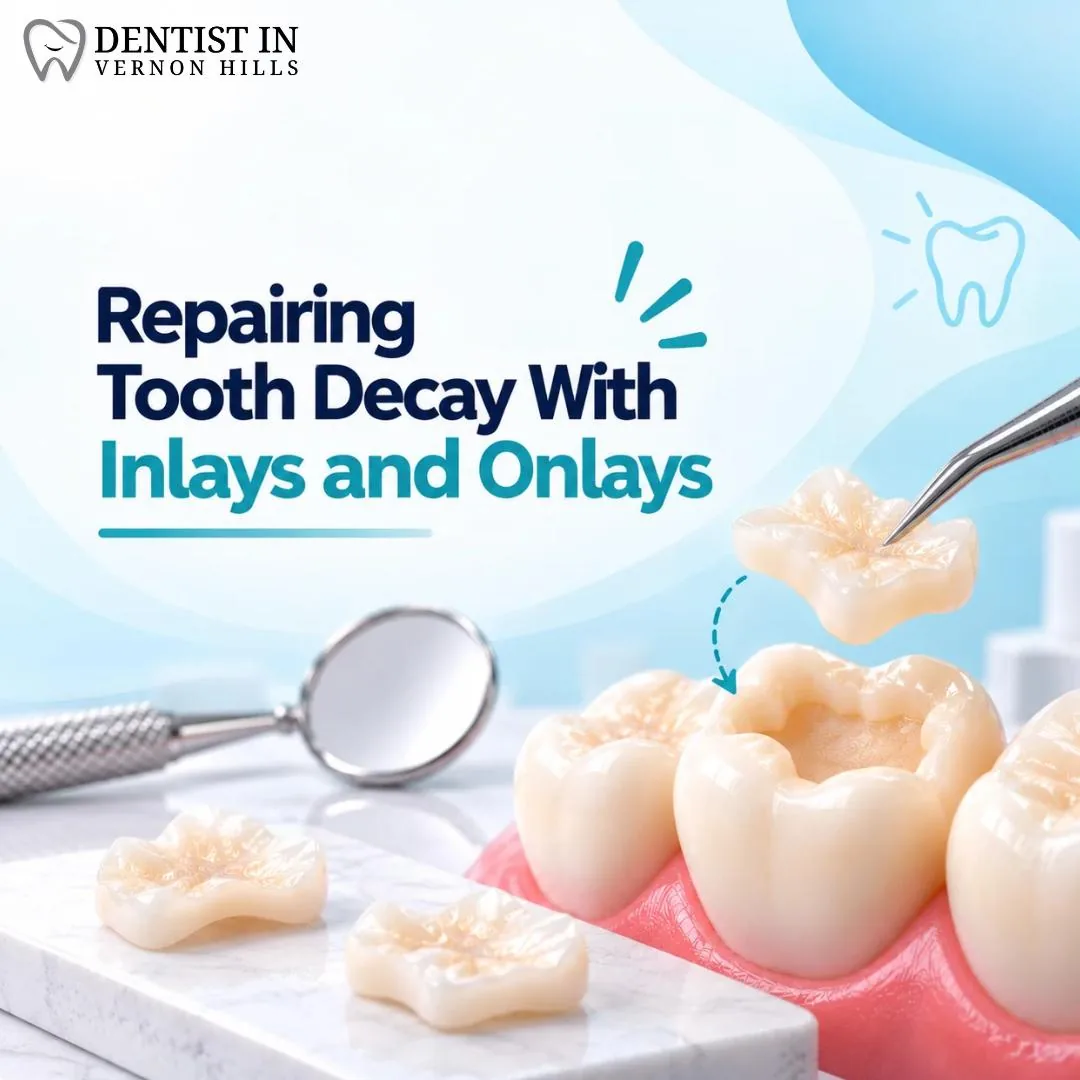
Inlays fix damage inside the tooth cusps. Onlays cover one or more cusps when the cavity is larger. Here you will know when to pick inlays or onlays. It also walks through the steps, care tips, and what to expect.
Dental inlays and onlays fix teeth with decay. They fit precisely into the damaged part, creating a strong and natural-looking repair.
Inlays repair damage within the cusps of a tooth. They act as custom-made restorations, indirect tooth-colored fillings that restore the chewing surface. Dentists use them to replace old fillings and to fix chipped, cracked, or decayed teeth.
These restorations fill areas where decay has taken over without covering the whole tooth like a crown. Inlays offer a durable, effective alternative to traditional fillings in restorative dentistry, and they often work faster and with less pain after the cavity has been removed.
Inlays aren’t the only solution for dental issues. Onlays step in to tackle more significant damage. They address decay that affects one or more cusps of a tooth. Unlike fillings, which fill small cavities, onlays cover larger areas. These custom-made restorations help restore the structure and function of damaged teeth.
Onlays become essential when cavities grow too large for traditional fillings. They fit snugly over the tooth's surface rather than capping it completely like a crown would. This approach helps maintain more of the healthy tooth while providing strength and durability to withstand everyday use.
Patients enjoy this option because it balances effectiveness with minimal invasiveness in restorative dentistry.
Inlays and onlays serve different purposes in tooth restoration. Inlays fit inside a cavity, while onlays cover the cusp of a tooth, offering more protection than traditional fillings or crowns.
This compares inlays to fillings in clear, concise points.
| Topic | Summary Points |
|---|---|
| Basic Definition | Inlays are indirect, tooth-colored fillings made outside the mouth and placed into the tooth. Fillings are placed directly into a cleaned cavity during the same visit. |
| Location of Repair | Inlays repair damage within the cusps, inside the chewing surface. Fillings patch smaller cavities that do not need work on the cusps. |
| Extent of Damage | Onlays, not covered here, restore damage that extends to one or more cusps. Fillings work for small to moderate decay. When cavities are too large for amalgam fillings, onlays or inlays become options. |
| Coverage | Inlays do not cover the whole tooth like a crown. Fillings also avoid full coverage but may not restore large missing structures. |
| Names | Inlays and onlays are also called indirect tooth-colored fillings or partial restorations. Amalgam refers to older metal fillings. |
| Chewing Surface | Both inlays and onlays primarily restore the chewing surface of decayed teeth. Fillings can also restore chewing surfaces if decay is small. |
| Durability | Inlays and onlays are durable alternatives to traditional fillings. They provide longer-lasting strength for larger defects. |
| Treatment Experience | After the decay is removed and the cavity is prepared, treatment with inlays and onlays is easier, faster, and generally less painful. The cavity has already been cleaned and filled in the lab process. |
| Additional Uses | These restorations can restore chipped, cracked, or decayed teeth. They also fill small gaps between teeth when appropriate. |
| Clinical Note | A dentist recalled a 2023 case where a molar with old, leaking fillings was replaced with an inlay. The patient reported less sensitivity and better chewing after two weeks. |
| When to Choose Which | Choose an inlay for damage inside the cusps. Choose a filling for small, simple cavities. Choose an onlay when decay reaches one or more cusps or when amalgam cannot hold. |
A dentist recounts a case where an onlay saved a tooth that once seemed destined for a crown.
| Topic | Onlays | Crowns |
|---|---|---|
| Purpose | Repair damage that reaches one or more cusps. Used when cavities are too large for amalgam fillings. | Cover and protect the whole tooth. Used when much of the tooth is lost or weak. |
| Coverage | Restore chewing surface only, and replace old fillings. Fit inside and over cusps as needed. | Encase the entire visible tooth above the gum line. Replace large failing restorations. |
| Conservation | Preserve more natural tooth structure. Offer a conservative treatment option. | Require more tooth removal. Often need more reshaping before placement. |
| Fabrication | Custom-made restorations, also called indirect tooth-colored fillings or partial restorations. | Also custom-made. Often involve more steps to fit over all surfaces. |
| Durability | Considered durable. Effective alternative to traditional fillings for treating dental decay. | Very strong for severe damage. Provide long-term protection for badly damaged teeth. |
| Comfort and Recovery | The procedure tends to be easier, faster, and less painful, since the cavity has already been removed and filled. | May cause more sensitivity early on. Often needs more adjustment time after placement. |
| Use Cases | Fix chipped, cracked, or decayed teeth, and fill gaps between teeth. Focus on chewing surfaces. | Restore teeth with extensive decay or structural loss. Used when a full cap is necessary. |
| Clinical Tip | A dentist remembered fitting an onlay after removing decay, and the patient kept normal chewing function. | A clinician recalled switching to a crown when too much tooth had been lost to save with an onlay. |
Inlays and onlays offer a natural look that blends perfectly with teeth. They provide strength, making them a smart choice for tooth restoration.
Inlays and onlays offer a natural appearance that blends seamlessly with existing teeth. These custom-made restorations match the color of natural tooth enamel, making them nearly invisible.
Many patients appreciate this aesthetic advantage over traditional fillings, which can look dull or metallic.
After her inlay treatment, Sarah felt thrilled with her smile. Friends even commented how they noticed nothing different about her teeth; to them, everything looked natural. Inlays and onlays restore not just function but also confidence for those dealing with chipped or decayed teeth while maintaining a beautiful look.
Inlays and onlays offer great durability and strength for tooth restoration. These custom-made restorations fit perfectly into the damaged areas of a tooth, filling in where decay has taken hold.
Unlike traditional fillings, they handle chewing pressure well, making them a reliable choice for the back teeth.
Both options help restore chipped or cracked teeth effectively. Patients find that inlays and onlays last longer than regular dental fillings. They serve as a strong alternative when cavities are too large for simple amalgam fillings.
Plus, these partial restorations blend seamlessly with natural teeth, giving patients confidence in their smiles while promoting overall oral health.
Inlays and onlays serve as a conservative treatment option for tooth decay. These custom-made restorations fit precisely into the damaged areas of a tooth, restoring its function without covering the entire structure like crowns do.
Patients prefer inlays and onlays because they preserve more of the natural tooth compared to traditional fillings. Using these treatments can help maintain stability while effectively addressing issues such as cavities or damage.
Both inlays and onlays provide a strong solution for larger cavities that amalgam fillings cannot handle. They blend well with existing teeth, offering a natural appearance that people appreciate.
The process is often quicker and less painful since any decay has already been removed before placing these restorations.
The procedure for inlays and onlays starts with an examination. The dentist prepares the tooth and takes impressions to create a perfect fit. After that, they send these molds to a lab where technicians craft custom restorations.
Once ready, the dentist places them carefully in your mouth. Finally, they make adjustments for comfort and function.
Dental professionals start with a thorough examination to assess tooth decay. This initial step sets the stage for effective treatment.
Custom fabrication and fitting play a crucial role in the process of using inlays and onlays. These steps ensure a precise match for the patient’s needs.
These details highlight how specialized techniques contribute significantly to effective tooth repair and long-lasting results in restorative dentistry.
Placement and final adjustments ensure that inlays and onlays fit perfectly. This stage is crucial for comfort and effectiveness in the repair of tooth decay.
To care for inlays and onlays, brush twice a day and floss daily to keep oral health in check. Avoid hard or sticky foods that might harm these restorations. Regular dental checkups will help maintain their condition.
Taking care of inlays and onlays helps maintain oral health. With the right daily habits, everyone can protect their dental restorations.
Inlays and onlays require careful attention to diet. Hard foods can damage these restorations or even chip them. Sticky foods pose a different risk. They might pull at the edges of inlays and onlays, loosening their grip on the tooth. Chewy candies or tough meats could lead to unwanted stress on dental work.
Patients should choose softer options instead. Fruits, veggies, and bread tend to be easier on teeth while still satisfying cravings. Staying mindful about food choices helps maintain oral health after treatment for tooth decay with inlays and onlays.
This simple step supports longevity and stability in dental restorations, allowing patients to smile confidently for years ahead.
Dental checkups play a key role in maintaining oral health. Regular visits to the dentist help catch issues early, such as tooth decay or cavities, before they become larger problems.
A dentist can assess the condition of inlays and onlays during these exams. This ensures that restorations stay strong and function well.
Besides checking for decay, dentists clean teeth thoroughly, removing plaque buildup. With preventive dentistry practices like this, patients often avoid future treatments. For instance, timely checks reduce chances of needing more extensive procedures later on.
Keeping up with dental visits also helps maintain beautiful smiles after getting custom-made restorations like inlays and onlays; that’s the goal!
Inlays and onlays are dental restorations used to repair tooth decay. They fit into or cover damaged areas of teeth. Dentists use them when fillings aren't enough.
Inlays fill cavities within the tooth, while onlays cover larger areas, including the cusps. Think of it this way: an inlay is like a cozy blanket for your tooth; an onlay is more like a sturdy roof over your house.
Getting inlays or onlays usually isn't painful thanks to local anesthesia. You might feel some pressure during the procedure, but discomfort should be minimal afterward as well.
With proper care, inlays and onlays can last many years, sometimes even over a decade! Regular brushing, flossing, and dental visits help keep them strong against future decay.
Tell us a little about what you need — we'll be in touch shortly.
555 E Townline Rd Ste 4, Vernon Hills, IL 60061, United States

Hi! I'm Tooth fairy! Your AI Assistant Ask me anything