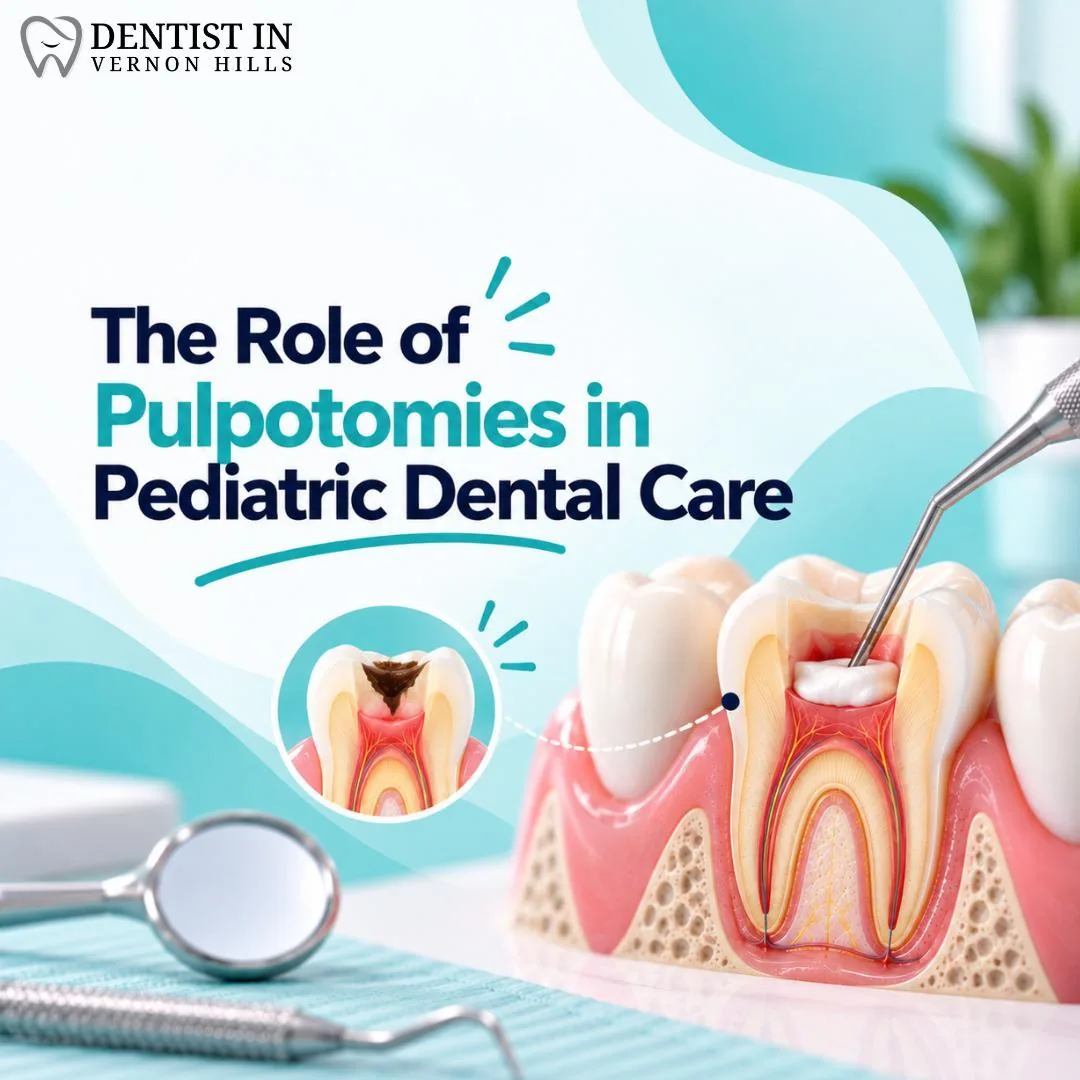
Many parents panic when a child has a bad cavity. They fear toothaches, missed school, and a trip to the dentist that ends in a tooth pulled. A pulpotomy is a dental procedure that treats decay that reached the pulp chamber but left the roots healthy. It often saves the baby tooth from extraction. Here you will know about pulpotomy and how it helps keep baby teeth in place.
Moving from the introduction, a pulpotomy is a common dental procedure for children. It removes infected pulp tissue in the crown and keeps the roots intact. This treatment stops infection, limits pain, and aids tooth preservation of baby teeth. Pediatric dentistry uses pulpotomies to avoid extractions and protect oral health.
A pediatric dentist once treated a five-year-old with deep tooth decay and saved the tooth with a pulpotomy. The child left with less pain, a restored chewing surface, and a lower risk of needing a root canal later.
Dentists follow with a filling or crown to strengthen the tooth and support future development.
After describing what a pulpotomy is, parents want to know if their child needs one. Dentists recommend a pulpotomy when deep tooth decay reaches the pulp tissue but the root remains healthy.
Signs include sharp or lingering pain, swelling, or a visible abscess. X rays that show decay near the pulp or a large cavity also push clinicians toward treatment. A pediatric dentist who performed over 400 pulpotomies noted that most cases involve baby teeth with large caries that still have a chance at preservation.
The goal is to remove infected pulp, stop infection, and avoid extractions or root canal therapy on primary teeth.
Clinicians consider the child’s age and restorability of the tooth. If the tooth can hold a crown or filling after treatment, a pulpotomy often wins over extraction. If infection has spread into the root canals, or the tooth is fractured beyond repair, then a root canal or extraction may follow.
In one clinic study, kids returned to class the next day with less pain and better oral health after pulpotomy and crown placement. Parents often feel relief when dentists explain that this dental procedure aims at tooth preservation and long term function.
Pulpotomies offer vital benefits for children’s dental health. They help preserve baby teeth, keeping smiles intact while kids grow. By treating pulp tissue issues early, these procedures prevent more serious infections and complications down the line.
Children can avoid extractions and other invasive treatments with this simple solution. Parents appreciate how pulpotomies promote better oral health for their little ones.
Primary teeth play a crucial role in a child's development. These baby teeth help with chewing and speaking, laying the groundwork for adult teeth. A pulpotomy can save these important little guys when decay threatens their health. This dental procedure removes infected pulp tissue while preserving the tooth's outer structure.
Keeping primary teeth intact prevents future dental issues. If children lose their baby teeth too early, it may lead to misalignment or overcrowding of adult teeth later on. Parents often overlook this aspect of oral health, but maintaining these precious pearly whites is key to a healthy smile down the road.
A pulpotomy helps stop the spread of infection. Untreated tooth decay in baby teeth can lead to serious problems. This procedure cleans away infected pulp tissue, protecting surrounding areas from damage. It also prevents pain and discomfort that come with dental issues.
Saving primary teeth is crucial for a child's oral health. Healthy baby teeth guide adult teeth into place. They play a key role in proper speech development too. Pulpotomies keep these essential teeth intact, reducing the chances of needing extractions later on. With good dental care, kids can smile brightly without fear of future complications.
A pulpotomy is a dental procedure for children. It treats decay that affects the pulp of a baby tooth. The dentist removes infected tissue and seals the tooth to save it.
Pulpotomies help maintain baby teeth until they naturally fall out. Healthy baby teeth support proper chewing, speech development, and alignment of adult teeth.
The dentist numbs the area first; then, they remove the damaged pulp from inside the tooth. After cleaning, they fill it with a special material to protect it from further decay.
Like any procedure, there can be some risks such as infection or discomfort after treatment. However, these issues are rare when performed by an experienced pediatric dentist who knows how to make kids feel comfortable during their visit.
Tell us a little about what you need — we'll be in touch shortly.
555 E Townline Rd Ste 4, Vernon Hills, IL 60061, United States

Hi! I'm Tooth fairy! Your AI Assistant Ask me anything